The University of North Carolina at Chapel Hill
14 innovative College projects win Seed Funding Awards
October 6, 2026
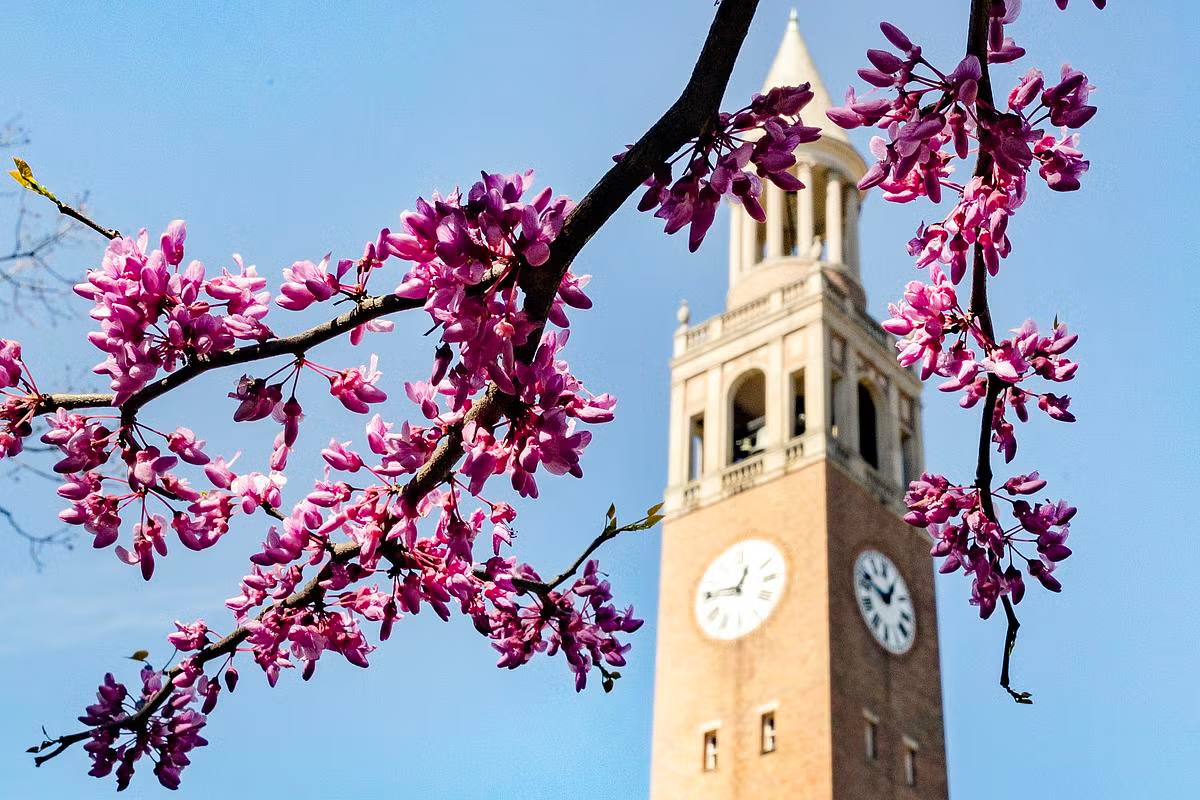
(Johnny Andrews/UNC-Chapel Hill)
For the second year in a row, the Arts and Sciences Fund directly supported 14 Seed Funding Awards as part of the College of Arts and Sciences Seed Funding Program in the Office of Research and Innovation. Read on to learn more about the research projects made possible by the alumni and friends who contribute to the Arts and Sciences Fund annually.
The UNC College of Arts and Sciences has announced the 14 projects that will receive the second round of Seed Funding Awards for groundbreaking scholarly projects and collaborative research across disciplines.
The College of Arts and Sciences Seed Funding Program in the College’s Office of Research and Innovation supports projects across the College’s academic departments — and beyond — that are creative and bold and not only push boundaries but also yield tangible benefits for communities and society at large.
This year, the College received 62 applications, and 14 were selected for funding. The 14 funded applications represent 31% of all disciplines in the College.
The College of Arts and Sciences Seed Funding Program is made possible through the generous support of the Arts and Sciences Fund and the Wells Family.
Learn more about the 2026 seed grant recipients’ projects below:
“Relational Ecologies: Uncovering the Deep Histories of Sustainable Urbanism with Paleogenomics and Zooarchaeology”
Benjamin Arbuckle, department of anthropology with co-investigators Sharon Steadman, SUNY Cortland; Gregory McMahon, University of New Hampshire; Füsun Ozer, Hacettepe University, Türkiye and Yılmaz Erdal, Hacettepe University, Türkiye
This collaborative project will investigate how ancient urban economies operated within, rather than separate from, their ecological environment over the past 10,000 years. Centering a case study from an urban archaeological site in Türkiye (Turkey), the team will document and map the complex relationships between microbes, pathogens, plants, livestock, wild animals and humans to generate a new understanding of ancient urban ecologies for comparison with those of the modern era.
“Characterizing the Impacts of Wildfires on Circulating Extracellular Vesicles and Lipidomic Profiles in the Firefighter Cancer Cohort Study”
Erin Baker, department of chemistry with co-PI Julia Rager, Gillings School of Global Public Health, department of environmental sciences and engineering
This pilot study will investigate how wildfire smoke exposure contributes to chronic diseases, including cancer. Based on blood samples taken from firefighters before and after the 2025 Los Angeles wildfires, the researchers will analyze extracellular vesicles — small packets of cellular material that can contain signals of disease — to pinpoint markers of potential cancer risk and clarify how biological mechanisms linked to wildfire smoke contribute to that risk.
“Gaia in Technicolor: A Novel Approach for Mapping the Variability of Stars through H-R Diagram Motions”
Brad N. Barlow, department of physics and astronomy with co-investigator Tarek Zikry, School of Data Science and Society
Astronomers use a graph called the H-R diagram to understand a star’s evolutionary status, age and overall behavior. This project will use machine learning to process data from the European Space Agency’s Gaia spacecraft cataloguing how the positions of millions of rapidly changing stars shift in the H-R diagram over time. By representing each star’s journey as a mathematical curve, the researchers aim to uncover the physical processes underlying the star’s behavior. Building on this analysis, the project will produce a publicly available catalog of variable stars and new methods for future sky surveys, while expanding hands-on research opportunities for Carolina students.
“Pieces of Home: Stories of Jewish Objects from Buttenhausen”
Gabrielle Berlinger, department of American studies with co-PI Ruth von Bernuth, department of Germanic and Slavic languages and literatures
This traveling exhibition and accompanying publication will trace the journeys of objects carried by Jews deported from Buttenhausen, Germany, in the early 1940s. The researchers will explore how these objects became generational ties to Buttenhausen for Jewish families and their descendants, how Jewish objects were repurposed by non-Jews and how these objects shaped relationships between Jews and non-Jews before, during and after World War II.
“NightCap light sensor”
Matthew Bhagat-Conway, department of city and regional planning with co-PIs Matthew Palm and Tab Combs, department of city and regional planning
With nighttime pedestrian crashes on the rise nationwide, this project aims to counter that trend by investigating how intersection lighting contributes to the risk. By developing and deploying low-cost, “NightCap” wearable light sensors through volunteer pedestrians and a lending library, the research team will develop North Carolina’s first large-scale lighting inventory of Durham, North Carolina, intersections, serving as a model for best practices and future applications in community planning efforts.
“The role of striatal tissue iron in adolescent outcomes and stimulant use in youth with ADHD”
Jessica Cohen, department of psychology and neuroscience with co-investigators Nicholas D. Fogleman and Emil A. Cornea, UNC School of Medicine, department of psychiatry
Symptoms of attention deficit/hyperactivity disorder often emerge in adolescence and are believed to be linked to activity of the neurotransmitter dopamine. Because current methods for assessing dopamine activity are invasive and unsafe for teens, this pilot study aims to develop a noninvasive approach to measuring dopamine activity. The researchers will examine how this measure relates to risk taking, academic achievement and potential response to stimulant medication, setting the stage for safer and more precise ADHD assessment in adolescents.
“Growing Food, Cultivating Belonging: A Refugee-Centered Community Garden in North Carolina”
Pervin Banu Gokariksel, department of geography and environment, with co-PI Lamis Jomaa, Gillings School of Global Public Health, department of nutrition
This pilot project will partner with the New Arrivals Institute in Greensboro, North Carolina, to revitalize its inactive community garden and integrate it with a new on-site food pantry, helping refugees and immigrants find healthy, affordable and culturally meaningful foods during early resettlement in North Carolina. By documenting newcomer experiences through reflections, stories and surveys and capturing their food traditions through shared recipes, the project will lay the groundwork for a replicable model that advances food security research and sustainable programming practices for community-serving organizations.
“Global Chinese Foodways Workshop”
Michelle T. King, department of history
Despite the global prevalence and diversity of Chinese cuisine worldwide, little is understood about how Chinese foodways shape cultural exchange and global consumption patterns — a gap this project seeks to close by convening an international, interdisciplinary workshop in 2027. This project will bring together scholars from six continents to discuss the transnational circulation, adaption and meaning of Chinese culinary practice, fostering future workshops and producing edited volumes that broaden the global study of Chinese food.
“Combating bed bugs from the endosymbionts out”
Benjamin Parker, department of biology with co-PI Hilary Davis, UNC School of Medicine, department of emergency medicine
Reproduction and pesticide resistance among bed bugs is rising in North Carolina urban environments, driving renewed scientific attention to these increasingly resilient pests. This project aims to investigate maternally inherited bacteria found in bed bugs and develop genetic engineering tools that could inform new approaches to bed bug management.
“Piedmont Archives and Landscape Memories (PALM): A Community-Based Initiative in Regional Archaeology”
Douglas Smit, department of anthropology with co-PIs Sara Smith, department of geography and environment, and Mary Elizabeth Fitts, Research Laboratories of Archaeology, and community partner Danita Mason-Hogans, Bridging the Gap.
This project will examine how natural landscapes in the North Carolina Piedmont were shaped by historical communities, uncovering how these communities structured daily life and adapted to environmental and political change. By combining archival records with digital mapping, archaeological surveys and environmental analysis, researchers will produce a publicly accessible digital landscape archive and educational materials demonstrating how the past remains visible in the spatial patterns that continue to shape our experience of place.
“Democracy’s Wind Tunnel: Simulating Local Governance to Counter Nationalization”
Shashank Srivastava, department of computer science with co-PIs Santiago Olivella, department of political science, and Snigdha Chaturvedi, department of computer science
Nationalized political dynamics increasingly shape North Carolina school board and city council meetings. This project will design and test an AI‑driven simulator that reconstructs previously recorded meetings to analyze how shifts in rules, voting methods, and procedures alter outcomes. It will deliver evidence‑based tools to strengthen local governance, anchored by an opensource dataset and a Nationalization Index baseline for North Carolina communities.
“Sounding Like Yourself in Another Language: Creating AI-Based Profiles from Learner Speech to Support Voice and Identity”
Sophia Strietholt, department of Germanic and Slavic languages and literatures
Most language-learning tools focus on correcting grammar and vocabulary, overlooking the challenges learners face in developing an authentic, natural voice. In this project, researchers will develop an artificial intelligence tool that generates interpretable profiles of a learner’s speech patterns and uses them to deliver personalized feedback to inform language instruction and support learners in developing their desired voice without erasing identity.
“Beyond the Cue: Developing AI-Integrated Lighting & Projection Systems for Theatre”
Tao Wang, department of dramatic art with co-investigator Kathy Hunter-Williams, department of dramatic art, and collaborator Will Bosley, department of communication
This practice-based project will explore how artificial intelligence can make dynamic lighting and projection designs respond directly to theater performers, audience energy, speech and movement. By integrating speech-to-text systems, live sensors and AI-generated visuals, it will transform static cues into an adaptive visual environment that reimagines how live performance can feel responsive, alive and deeply interactive.
“Developing Protocols for Rapid Deployment of Unoccupied Aerial Systems across Diverse Contexts in Community Resource Management”
Colin Thor West, department of anthropology with co-investigator Susan Cohen, Institute for the Environment
Dramatic advances in drone-mounted multispectral sensors now allow unoccupied aerial systems (drones) to visualize landscapes in ways that are transforming fields from archaeology to environmental science. This project will develop a cross-disciplinary framework for rapidly deploying and processing data by incorporating drone-based mapping across field sites in North Carolina, New York, New Hampshire, and Togo (West Africa), each with distinct logistical demands and research needs.